Why Your Race Start Time Matters More Than You Think: Heat Acclimatization for Central Florida Riders
Are You Training for the Race You're Actually Going to Ride?
If you're getting ready for a hare scramble or enduro in Central Florida, you're probably thinking about your fitness.
You're working on your strength. You're riding when you can. Maybe you're adding some cardio, mobility, or core work to your routine.
But there's another part of race preparation that's easy to overlook:
Are you actually training for the conditions you're going to race in?
Because riding for two hours at 8am in relatively comfortable temperatures is a very different physical challenge than racing for two hours at 1pm in the Florida heat.
And if most of your training happens early in the morning because that's when it's cooler and more convenient, your body may not be getting much practice handling the heat it's going to encounter on race day.
That's where heat acclimatization comes in.
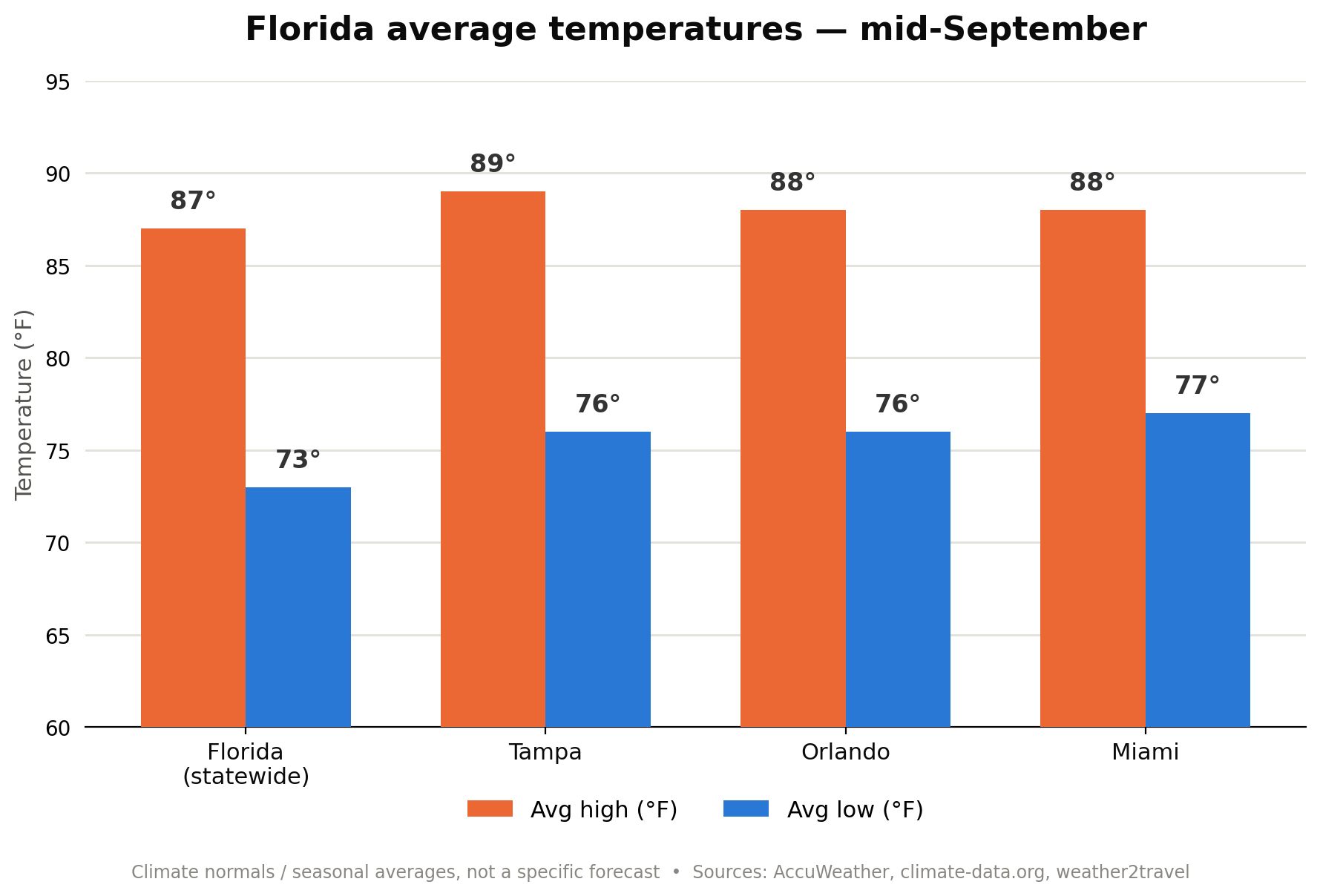
Central Florida Heat Is Part of the Race
If you've lived in Florida for any amount of time, you already know that the heat can be brutal.
And it's not just the temperature.
Humidity makes it harder for your body to cool itself because sweat doesn't evaporate as efficiently. Then you add a helmet, boots, gloves, riding gear, direct sun, and sustained physical effort.
Your body is working hard to keep your core temperature under control while you're also trying to navigate roots, ruts, sand, mud, hills, obstacles, and whatever else the trail throws at you.
That's a lot to manage.
And here's the thing: you might feel completely fine at the beginning of the race.
That's what can make heat-related fatigue tricky.
You can feel strong for the first 30–45 minutes and then start to notice that everything feels harder. Your reactions aren't quite as quick. You're making mistakes you normally wouldn't. You're struggling to maintain your pace.
By the last part of the race, you're not just fighting the terrain anymore.
You're fighting fatigue and heat.
Morning vs. Afternoon Racing
The time of day you're racing can make a big difference.
Morning races
Morning races generally give you a little bit of an advantage because you're starting before the hottest part of the day.
But that doesn't mean heat isn't a factor.
If your race lasts 1.5–2 hours, the temperature can continue climbing throughout the race. You may start in relatively comfortable conditions and finish when it's significantly hotter.
And because the race starts early, you also have less time to hydrate and fuel beforehand.
That means you need to show up prepared rather than assuming you'll have plenty of time to get fluids in once you arrive.
Afternoon races
Afternoon races are a different beast.
If you're lining up around lunchtime or later, you're starting when the heat may already be significant.
And you may have been at the race property for several hours before you even get on the bike.
You've been walking around. Getting your bike ready. Talking to other riders. Watching other classes. Sitting in the sun.
All of that adds up.
So by the time you actually line up, your body may already be carrying some heat and fluid loss.
Then you ask it to race hard for another 1.5–2 hours.
That's a completely different challenge than an early-morning race.
This Is Where Heat Acclimatization Comes In
Heat acclimatization is your body's way of adapting to repeated exposure to heat.
With consistent exposure, your body can become better at regulating temperature. You can begin sweating earlier, increase plasma volume, and become more efficient at managing the demands of exercising in hot conditions.
But you don't get those adaptations from one miserable afternoon outside.
It takes repeated exposure.
And the good news is that this doesn't necessarily mean adding another workout to your already busy schedule.
You can build some heat exposure into things you're already doing.
Train During Your Race Window
This is probably one of the easiest things you can change.
If your race starts at 1pm, but every single ride you do happens at 7am because it's cooler, you're making your training more comfortable—but you're not necessarily preparing your body for the conditions you'll experience on race day.
I'm not saying you need to do every workout in the hottest part of the day.
Please don't.
But incorporating some training during your expected race window can help your body get used to exercising in those conditions.
That could mean:
An occasional ride during the time of day you'll actually race
Walking or doing an easy aerobic workout outside
Yard work or mowing
Strength training outdoors when conditions are appropriate
Spending some controlled time outside during your race window
The goal isn't to see how much heat you can tolerate.
The goal is gradual, consistent exposure.
And as you get closer to race day, it makes sense for some of your training to look more like the race you're preparing for.
Don't Forget About Your Gear
There's another piece of the equation that riders sometimes overlook: your riding gear adds to your heat load.
You don't experience heat the same way wearing shorts and a T-shirt as you do wearing boots, pants, jersey, gloves, chest protection, and a helmet.
That doesn't mean you should intentionally overdress during training and try to make yourself miserable.
But when you're doing an easier session, gradually practicing in conditions that more closely resemble race day can help you understand how your body responds.
And it gives you an opportunity to figure out what works for you before race day.
That's important because race day is not the time to discover that your hydration strategy isn't working, your gear is making you overheat, or you don't tolerate something you've never tried before.
Hydration Starts Before the Race
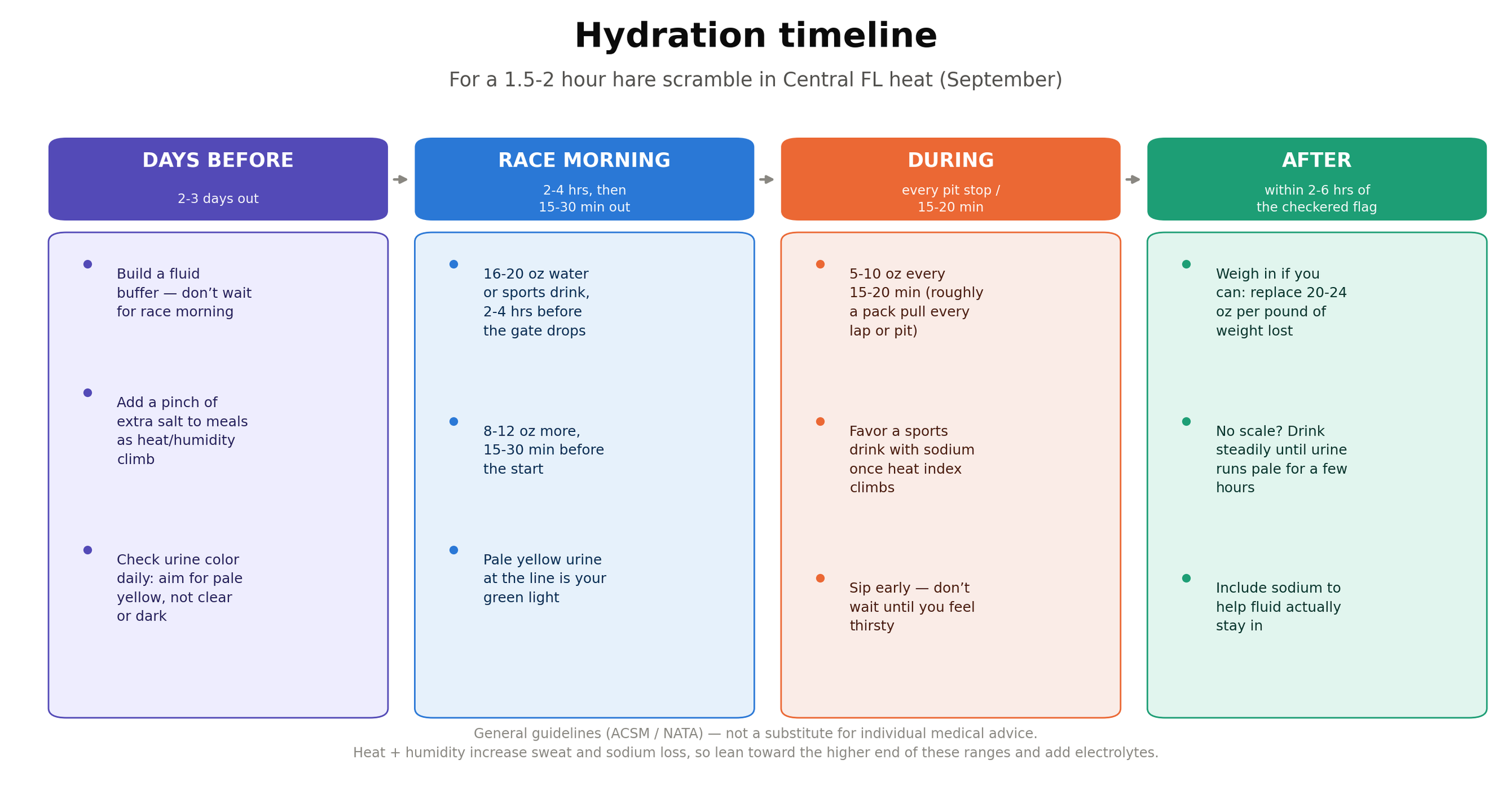
Heat acclimatization and hydration aren't the same thing, but they work together.
You can't completely fix dehydration by chugging a bunch of water five minutes before the race.
Instead, think about hydration as something you manage throughout the entire day.
For an early race, start your morning hydrated and continue drinking fluids with electrolytes as needed.
For an afternoon race, you have a much longer period to manage.
If you're at the race property for several hours before you line up, don't wait until 30 minutes before the start to think about hydration.
Sip consistently.
Stay in the shade when you can.
Avoid unnecessary time in the sun.
And if you have access to cooling strategies like ice, wet towels, misting fans, or a shaded pit area, use them.
The goal is to start the race feeling prepared—not already overheated.
What About During the Race?
For a 1.5–2 hour race, what you do before the race isn't enough.
You're going to continue losing fluid and electrolytes while you're riding, and you're also using a significant amount of energy.
If your race format gives you opportunities to get fluids during a pit or fuel stop, take advantage of them.
And just like with hydration, your fueling strategy should be something you've practiced ahead of time.
Race day is not the time to experiment.
Figure out what works for you during training so that when you're racing, you can focus on riding.
Pay Attention to What Your Body Is Telling You
Being hot and tired is unfortunately part of racing in Florida.
But there's a difference between being uncomfortable and developing heat illness.
Signs of heat exhaustion can include:
Heavy sweating
Muscle cramps
Headache
Dizziness or lightheadedness
Nausea
Weakness
Feeling like your effort suddenly feels much harder than it should
Cool, clammy skin
If you start experiencing these symptoms, don't just tell yourself to push through.
Stop. Get out of the heat. Remove excess gear and start cooling down.
And if symptoms are severe or getting worse, seek medical attention.
Heat stroke is a medical emergency.
Signs can include confusion or disorientation, slurred speech, loss of coordination, very hot skin, rapid heart rate, vomiting, or loss of consciousness.
If you or another rider shows these symptoms, get medical help immediately.
Don't try to tough it out.
Heat Fatigue Can Affect More Than Your Performance
This is the part that matters to me as a physical therapist and a rider.
Heat management isn't just about avoiding dehydration or heat illness.
It's also about what fatigue can do to your riding.
When you're fatigued, your reaction time can suffer. Your coordination can decline. Your decision-making isn't necessarily as sharp.
And when you're riding off-road, that matters.
Maybe you miss a line you normally would have seen.
Maybe you don't react quite as quickly to a rut.
Maybe you make a decision you wouldn't have made earlier in the race.
I'm not saying heat fatigue causes every late-race crash.
But if we can reduce one more factor that contributes to fatigue and poor decision-making, that's worth paying attention to.
You're already putting in the work to get stronger and fitter.
Make sure you're preparing your body for the conditions you're actually going to race in.
The Bottom Line
Your race start time isn't just a scheduling detail.
It's part of the demands of the race.
If you're racing in the morning, prepare for a race that may get progressively hotter.
If you're racing in the afternoon, prepare for the fact that you'll be starting—and potentially finishing—in significant heat.
And regardless of your start time, don't wait until race day to find out how your body responds.
Gradually expose yourself to the conditions you'll be racing in. Practice your hydration and fueling strategy. Pay attention to your gear. Learn to recognize the warning signs of heat illness.
Most importantly, remember that specificity matters.
The goal isn't simply to become fitter.
The goal is to become fitter for the thing you're actually asking your body to do.
Because that's what being Dialed In is all about.
At Dialed In PT & Wellness, I help off-road riders build the strength, conditioning, mobility, and injury-prevention strategies they need for the demands of real-world riding—not just generic fitness.
If you're training for a hare scramble or enduro in Central Florida, your training should prepare you for the race you're actually going to ride.