Why I Started Dialed In: Training Dirt Bike Riders Off the Bike
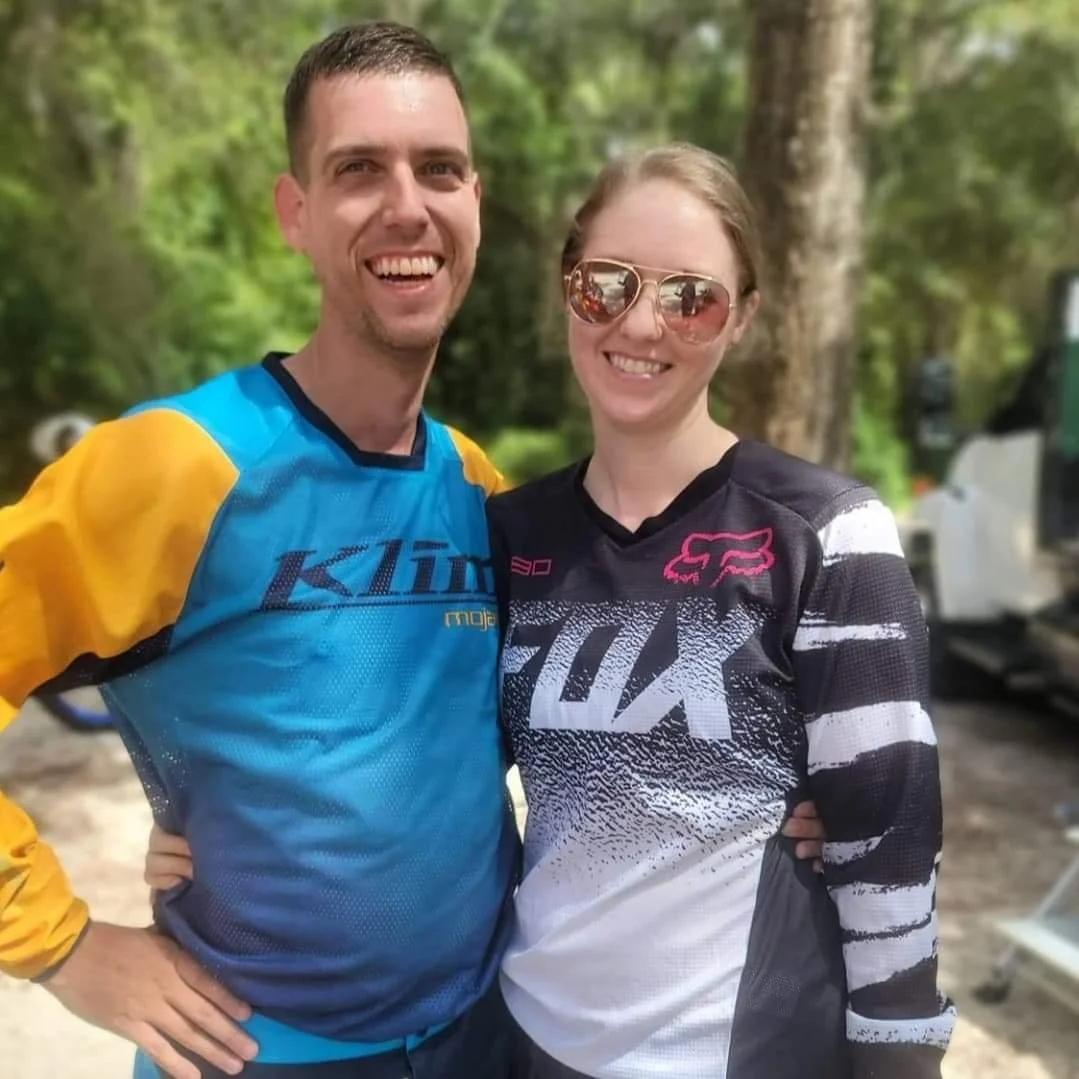
My husband set a goal to win a championship.
He already knew how to ride. What he needed was a body that could keep up with the demands of racing.
So I started training him off the bike.
We worked on his strength, endurance, grip, core, and conditioning — all the things that don't necessarily show up on a lap time but can make a huge difference when a race gets long and your body starts getting tired.
And he won that championship.
That was the moment my career took a turn I didn't see coming.
I'm a Physical Therapist — and a Dirt Bike Rider's Wife
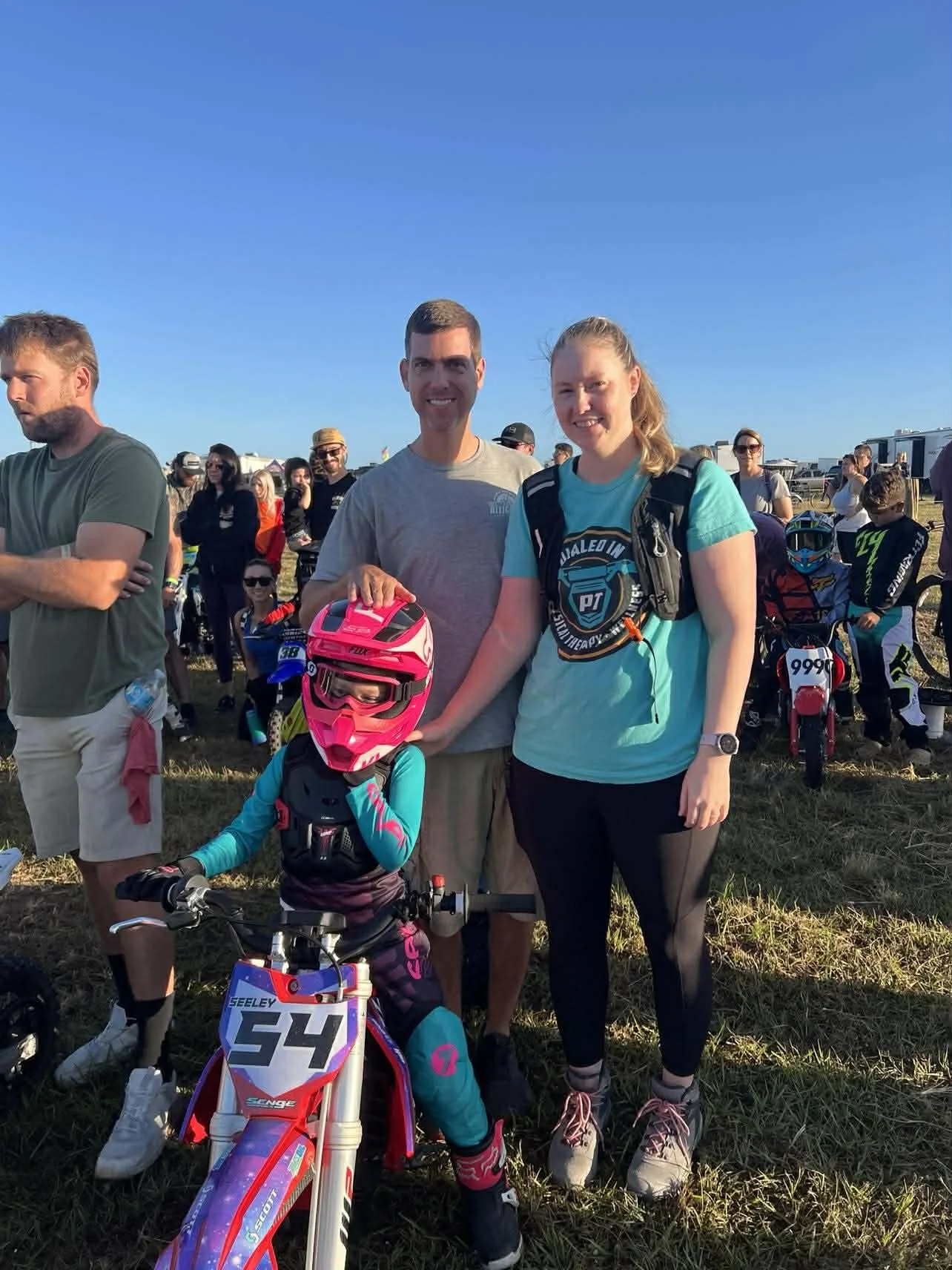
I'm Dr. Megan, a physical therapist, and I've spent my career learning how bodies develop, compensate, break down, and recover.
By day, I'm a full-time pediatric physical therapist, working with patients from birth through age 21. My clinical experience ranges from neurodevelopmental conditions to orthopedic and sports injuries.
It's a labor of love, and it's also where a lot of what I bring to off-road riders comes from.
But dirt bikes have become a pretty big part of our family life, too.
My husband races and rides with his friends. My daughter races, too, so I'm a race mom just as much as I'm a rider myself. She and I ride together, and sometimes we're all out riding as a family. And this fall, I'm planning to line up for my first race myself.
The more time I've spent around the sport, the more I've started noticing something:
The things I see as a physical therapist show up on the trails and at the races, too.
It Started With My Husband
When my husband decided he wanted to win a championship, I approached his training the same way I would approach any other athlete.
I started by looking at what his sport actually demanded from his body.
He needed to be able to grip the bike for hours without his hands and forearms becoming limiting factors. He needed a strong core that could handle constant rotation, impact, and movement. He needed the strength and endurance to keep producing late in a race, when fatigue starts affecting technique and decision-making.
So we built that.
His off-bike training wasn't just about getting stronger in the gym. It was about developing the physical qualities that would actually transfer to his riding.
And it worked.
He was stronger late in races. He could maintain his pace instead of fading. The fitness he built off the bike started showing up in what he could do on the bike.
And he won his championship.
But the championship wasn't the only thing that convinced me that we were onto something.
Training Isn't Just About Going Faster
I've also watched his off-bike training matter in situations where there wasn't a finish line.
He's had crashes that could have ended very differently. There's one in particular where he hit a tree head-on at speed — and somehow, he got up and walked away.
I'm not going to tell you that strength training makes you crash-proof. It doesn't.
Crashes are part of dirt bike riding.
But I have seen, over and over again, what being physically prepared can allow a rider to do when things don't go according to plan.
Being strong doesn't mean you're never going to get hurt. But strength, mobility, coordination, and physical resilience can give your body more capacity to handle the demands placed on it.
And sometimes, that matters just as much as what happens during a race when everything goes right.
Then Other Riders Started Asking for Help
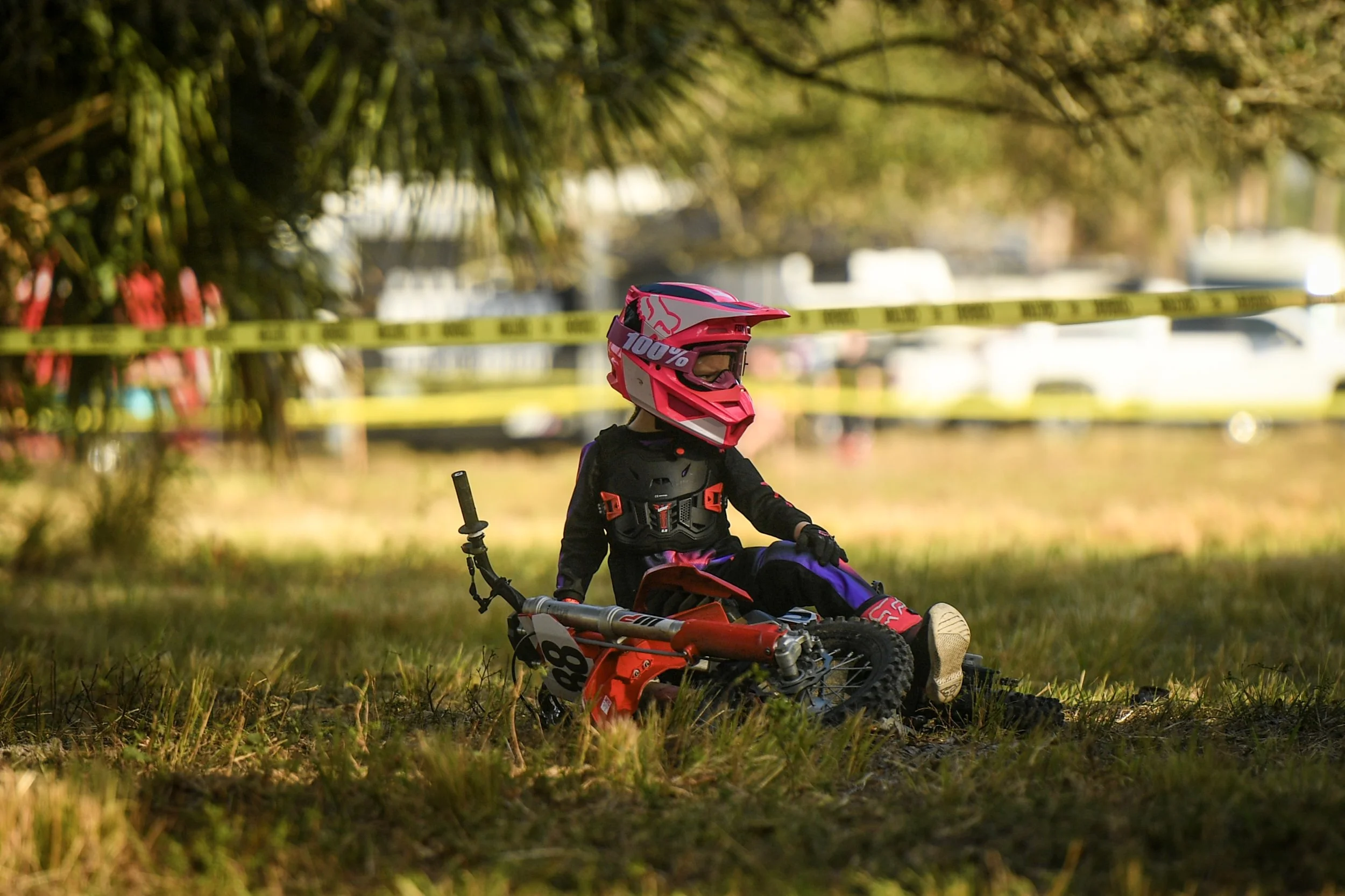
After my husband started seeing results, his friends began asking me for help too.
At first, it was about training.
Then they started coming to me with injuries.
Jammed fingers. Shoulder injuries. Low back pain. The accumulation of little problems that can happen when you ride and race year after year.
And I started realizing there was a gap.
These riders didn't necessarily need generic strength programs or traditional sports medicine advice.
They needed someone who understood the demands of their sport.
Because riding a dirt bike for several hours through whoops, rocks, roots, mud, hills, braking bumps, and technical terrain is a very different physical challenge than training for a 5K or playing a recreational soccer game.
The way you train should reflect the demands you're asking your body to handle.
That's where Dialed In came from.
Why Prevention Matters in Dirt Bike Racing
Here's one of the biggest things I want riders to understand:
You cannot train yourself to become crash-proof.
Crashes are part of dirt bike racing. They're not going away, and I'm never going to tell you that you can train hard enough to eliminate that risk.
But being injured doesn't have to be an inevitable part of every season.
The riders who stay healthy and keep riding year after year aren't necessarily the ones who never crash.
They're the ones who prepare their bodies for the demands of the sport.
They build strength.
They maintain mobility.
They develop endurance.
They work on resilience.
And they do it before they get hurt — not only after an injury forces them to.
That's what prevention-first training means to me.
It's not about preventing every crash. It's about giving your body the best chance to handle what racing throws at it and keeping you on the bike for the long haul.
What Dialed In Is About
That's the purpose behind Dialed In Physical Therapy & Wellness.
I want to help off-road riders get stronger, stay healthier, and be better prepared for the physical demands of riding and racing.
That means looking at more than just what happens on the bike.
It means strength and conditioning.
Injury prevention.
Mobility.
Recovery.
Race preparation.
Fueling and hydration.
And physical therapy when something does go wrong.
I've already worked one-on-one with riders, creating individualized training programs around their goals, their bodies, and the demands of racing.
But I'm also working toward something bigger.
I'm developing Dialed In Race Ready, a more comprehensive approach to race preparation that brings all of these pieces together.
I'm still working out the details, but the goal is simple:
Help riders show up to the starting line prepared for what the race is going to demand from them.
Because being fast is only part of the equation.
What you do off the bike matters, too.
And that's what we're going to work on here.
If you're a hare scramble or hard enduro rider who wants to get stronger, stay healthier, and keep doing this sport for years to come, I'd love for you to follow along.
We're just getting started.
Want more dirt-bike training and injury-prevention content?
I'm sharing training, recovery, injury prevention, and race-prep strategies for off-road riders on the Dialed In YouTube channel.